

Forged by Fire: A Brief History of Blacksmithing
@Harrisvets
Long before modern factories could produce thousands of identical tools, weapons, hinges, and household objects in a matter of hours, there was the blacksmith.
Working with little more than fire, an anvil, a hammer and a piece of metal, blacksmiths learned to transform raw material into something useful. For thousands of years, their work helped build communities, equip armies, support agriculture and shape everyday life. Even today, blacksmithing remains a craft that connects us with an earlier, more hands-on way of making things.
From Copper to Iron
The story of metalworking begins thousands of years ago. Some of the earliest metals used by humans were naturally occurring copper and gold, which could be shaped without the intense heat required for later metalworking.
Eventually, people learned to work with bronze, an alloy made primarily from copper and tin. The Bronze Age brought major changes to tools, weapons, and agriculture.
Iron eventually changed the equation again. Iron was more difficult to produce and work with, but it was widely available and could produce strong, durable tools and weapons. As civilizations became more skilled at smelting and forging iron, the blacksmith became an increasingly important member of the community.
The Iron Age began at different times in different parts of the world, but by the first millennium B.C., ironworking had become established across much of Europe, Asia, and the Middle East.
@Harrisvets
The Blacksmith's Shop
For centuries, the blacksmith's shop was a place where practical necessities were made and repaired.
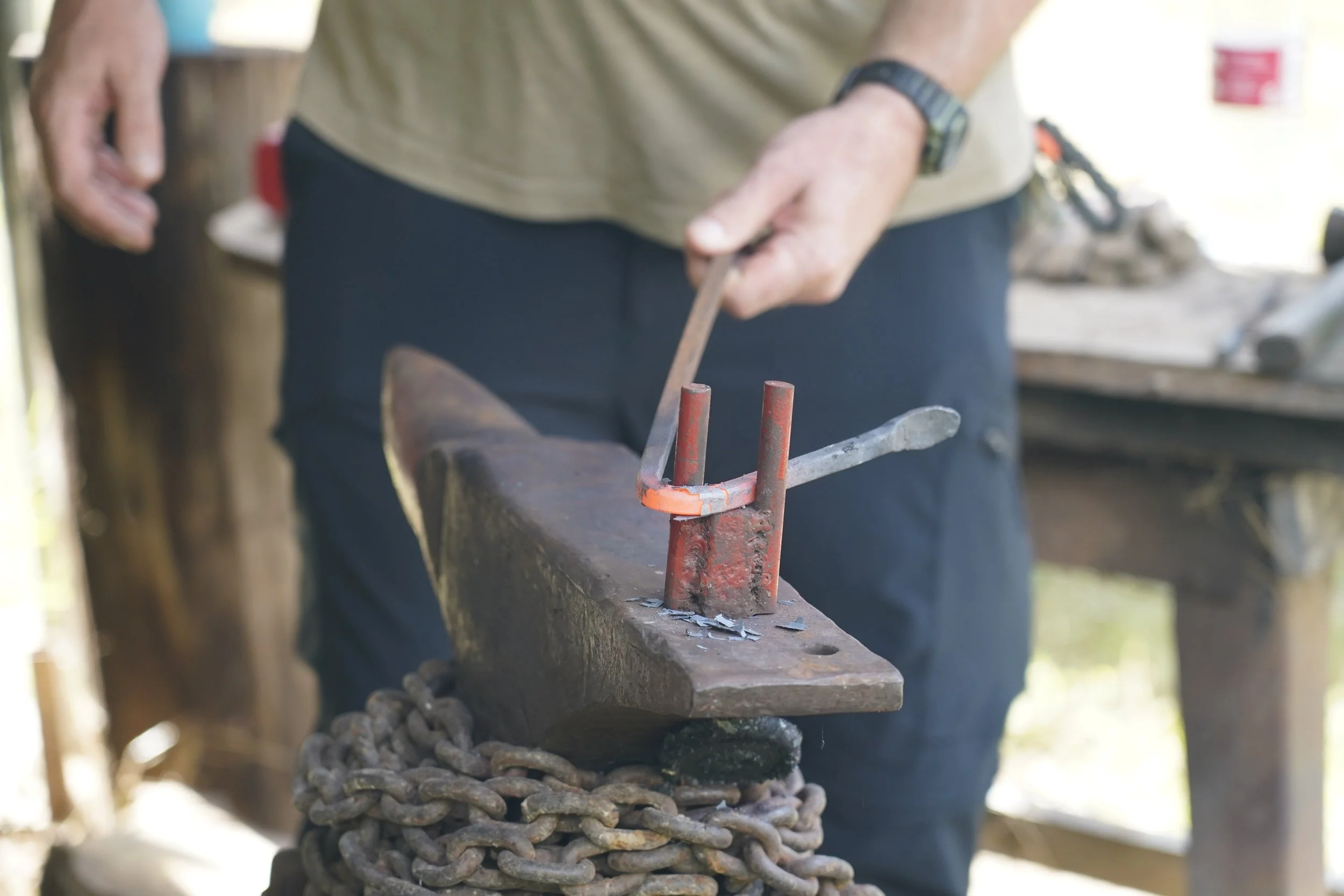
The basic process was deceptively simple: heat the metal, place it on an anvil, and strike it with a hammer. But producing a quality object required considerable skill. The smith had to understand how different metals responded to heat and pressure and know when a piece was hot enough to work without damaging it.
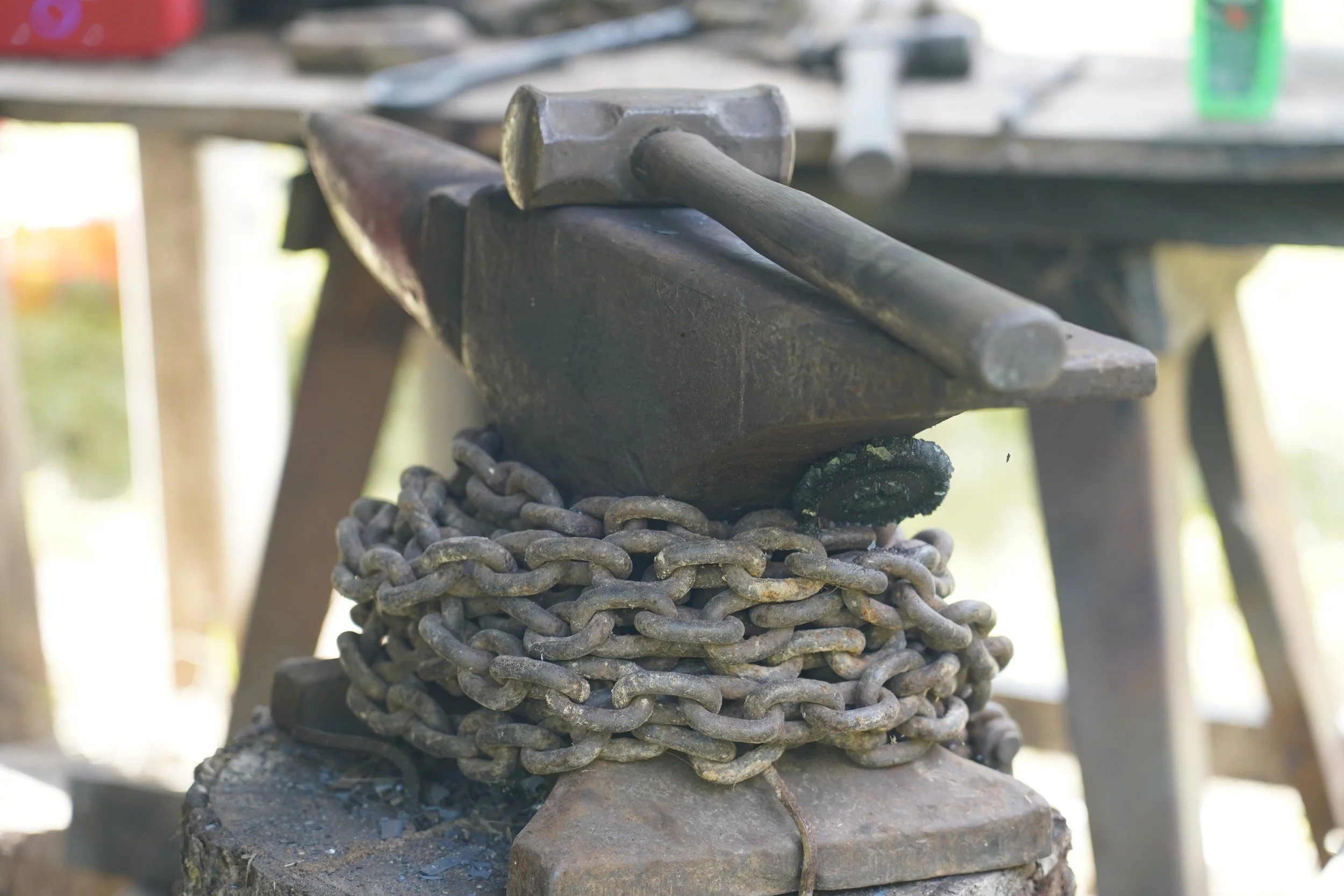
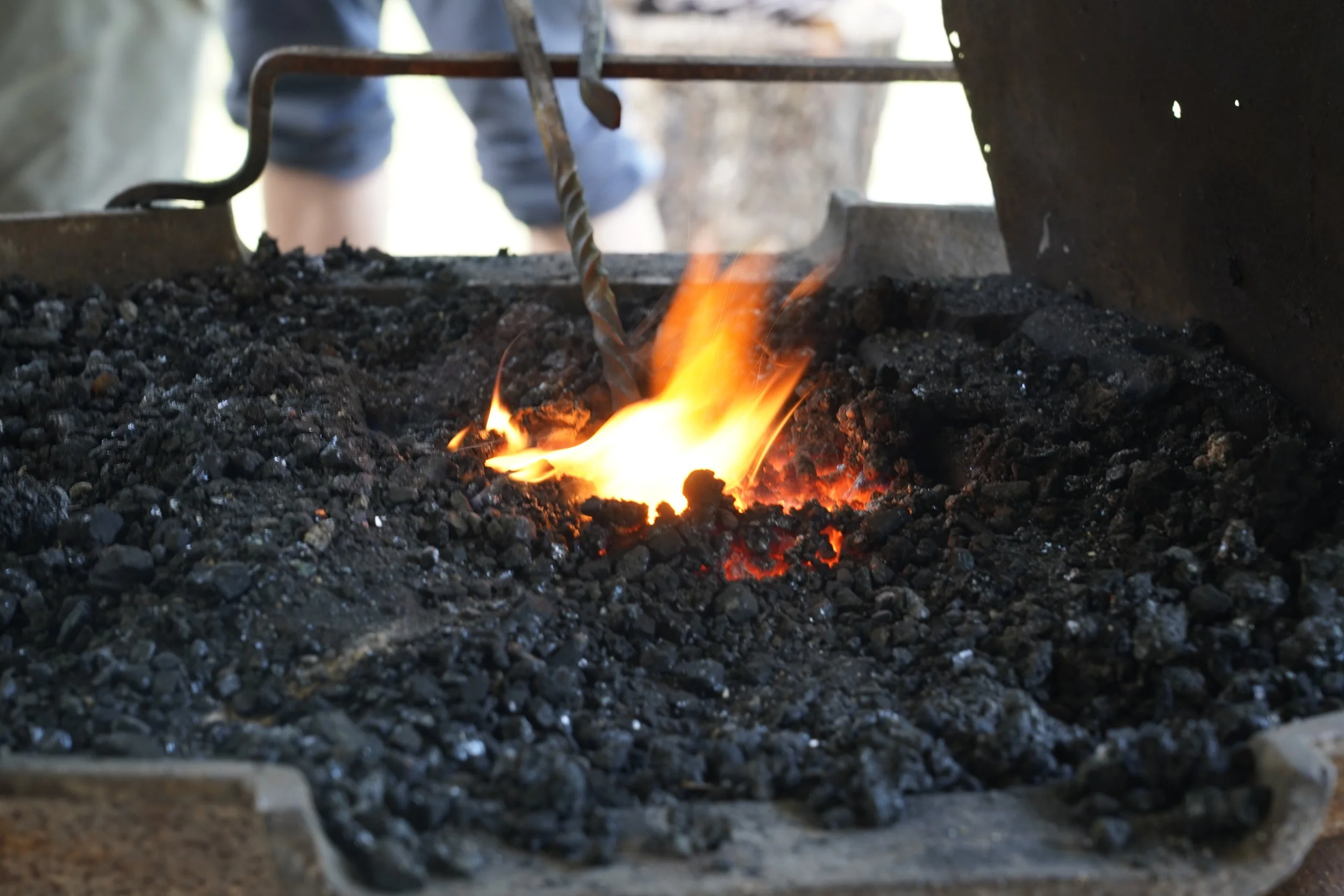
The forge provided the heat. Bellows or later mechanical blowers supplied oxygen to the fire. The anvil provided a solid surface for shaping the metal, while a collection of hammers, tongs, punches, and other tools allowed the smith to manipulate it into the desired form.
A blacksmith might make horseshoes, nails, hinges, knives, tools, agricultural equipment, household hardware and countless other objects. In rural communities, the local smith could be essential to keeping farms and transportation running.
Blacksmiths and the Military
Blacksmithing has also been closely connected to military history.
Armies depended on metalworkers to produce and maintain weapons, armor, horseshoes, and other equipment. Swordsmiths and armorers developed specialized techniques for producing weapons and protective equipment, while ordinary blacksmiths produced many of the less glamorous but equally necessary items that kept armies moving.
As military technology changed, so did the work of the smith. Metalworking contributed to everything from swords and spearheads to firearms and the equipment used to support transportation.
For soldiers, a properly maintained horse, wagon, or tool could be just as important as a weapon. The ability to repair equipment in the field was a practical necessity long before modern logistics and supply systems existed.
The Blacksmith and the Industrial Revolution
For much of history, blacksmithing was based on individual craftsmanship. That began to change dramatically during the Industrial Revolution.
Factories introduced machines capable of producing metal parts faster and in greater quantities than individual craftsmen could. Large-scale forging, casting and machining gradually replaced much of the traditional blacksmith's work.
The change did not happen overnight. Blacksmiths continued working in towns, farms and workshops, and skilled tradespeople remained important even as industrial manufacturing expanded.
But the role of the blacksmith changed. What had once been one of the primary ways communities produced metal goods increasingly became a specialized trade and, eventually, a traditional craft.
A Craft That Survived
Blacksmithing never completely disappeared.
Today, modern blacksmiths may create everything from knives and tools to decorative ironwork, sculptures, and custom architectural pieces. Some specialize in historically accurate reproductions, while others combine traditional forging techniques with modern equipment.
Part of the appeal is the process itself.
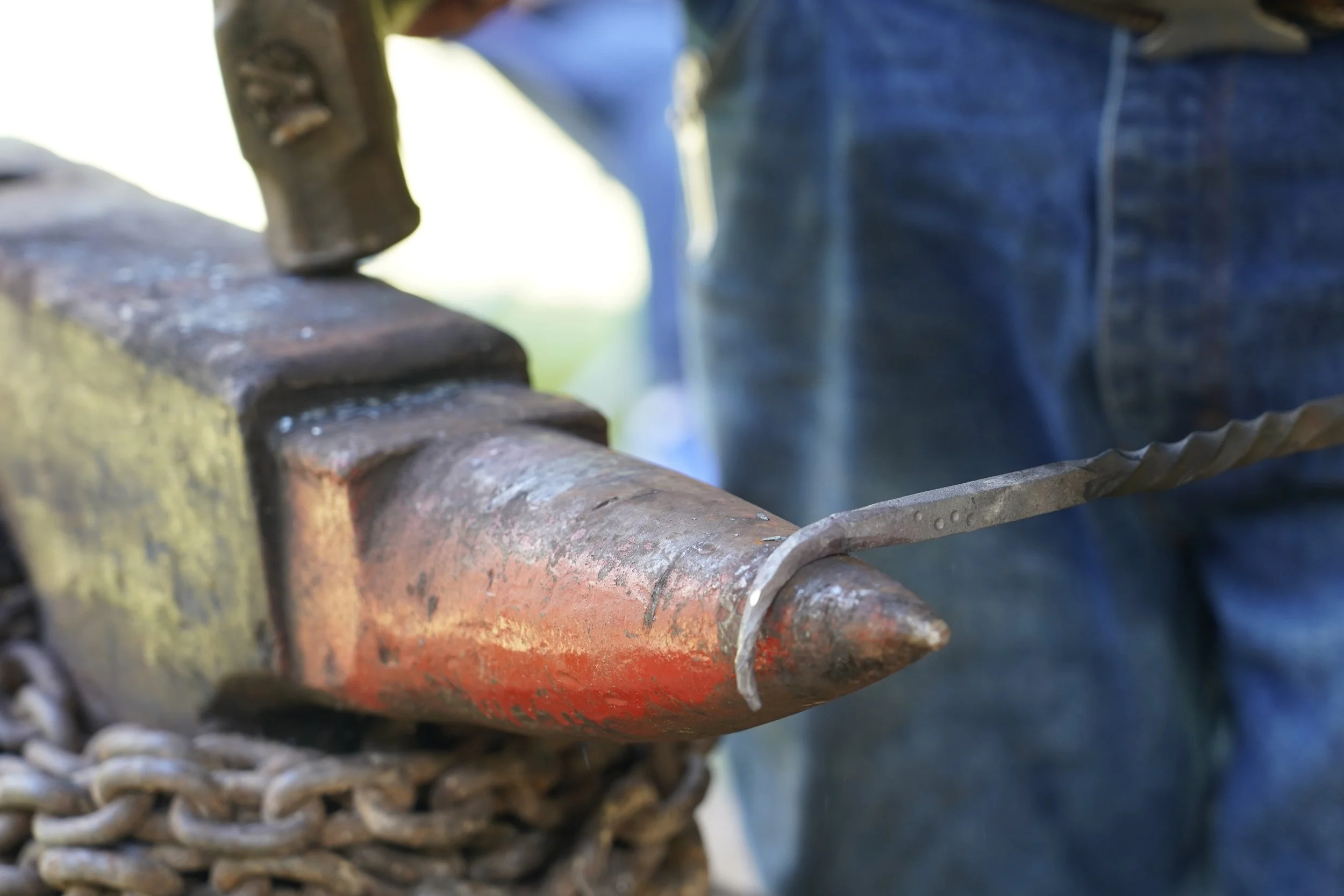
There is something different about making an object by hand. A piece of steel begins as a simple bar or piece of stock. After being heated, hammered, bent, cut, and shaped, it becomes something with a purpose.
The finished object carries evidence of the process. Hammer marks, slight variations, and the shape of the metal can tell you something about how it was made.
Why It Still Matters
Blacksmithing is more than an old trade preserved for historical interest. It is an example of a skill built around patience, repetition, and problem-solving.
You have to pay attention to the material in front of you. You have to recognize when something needs more heat, when to strike harder or softer, and when to stop. Mistakes cannot always be erased; sometimes the solution is to work with the mistake and find a new way forward.
For veterans, crafts like blacksmithing can also provide an opportunity to step away from screens and schedules and spend time learning something tangible. The goal does not have to be producing a perfect knife, tool, or piece of ironwork. Sometimes the value is simply in learning a new skill, working alongside other people and walking away with something you made yourself.
From ancient metalworkers to today's backyard and professional smiths, the basic idea remains remarkably similar: take something hard, heat it, work it, and give it a new shape.
Thousands of years after humans first learned to forge iron, the fire is still burning.
Keep Learning, Keep Creating
Blacksmithing is one of many traditional skills that can connect people with history while giving them something practical to learn and create. Whether you are interested in metalworking, woodworking, gardening, fishing, or another hands-on pursuit, learning a new skill can be a great way to spend time with others and build something of your own.
Harris County Veteran Services Department encourages veterans and their families to explore activities, programs, and opportunities throughout our community. Sometimes, getting involved starts with something as simple as picking up a new skill and seeing where it takes you.
Notes from Josh
WE. HAVE. THE. GOODS.
We have recently partnered with Stay Tuned for Vets and Dueling Hammers School of Blacksmithing to offer an intro class for veterans and their families. Be sure to follow us on our social channels to stay updated on when the class gets offered because its limited seats and THEY. FILL. UP. FAST.
Here is some RAW footage of our last one.